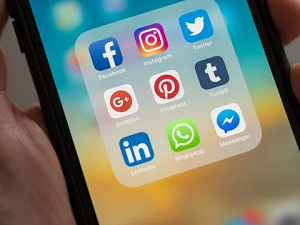
 Considered to be social media for professionals, LinkedIn is an invaluable tool for millions of people all over the world and a great way to make a wide range of professional connections.
Unfortunately, hackers and scammers are aware of this fact and tend to gravitate to it as well. They are hoping to take advantage of the unsuspecting. Recent research from the cybersecurity company Check Point reveals that LinkedIn has become the most spoofed brand in phishing attacks. These attacks account for a staggering 52 percent of such incidents globally.
This figure would be surprising all by itself but what makes it almost shocking is the fact that in the 4th quarter of 2021, LinkedIn was only the 5th most spoofed brand. They were just 8 percent of phishing attacks seeking to impersonate the brand.
Clearly, between late last year and right now something changed, and the social media property suddenly became a hot commodity on the Dark Web. In fact, as of now nothing else even comes close. Shipping giant DHL is the second most impersonated brand, accounting for 14 percent of all spoofing incidents globally. So it lags far behind LinkedIn in that regard.
After DHL the number of spoofing incidents fall off markedly, with Google accounting for just 7 percent, Microsoft and FedEx tied at 6 percent, WhatsApp at 4 percent, and Amazon at just 2 percent.
Beyond that, Maersk clocks in at 1 percent and Ali Express and Apple each account for 0.8 percent which is barely enough to register on the radar.
No one can say with certainty why it’s happening. The current theory is that given LinkedIn’s nature as a hub for professionals, the platform is a natural target and is especially attractive to spear phishers who specifically target well-connected professionals to gain access.
Whatever the explanation, if you rely on LinkedIn, be aware that not all communications you receive may be what they seem. So proceed with caution.